Organo-mineral fertilizers combine materials of organic origin with mineral plant nutrients in a single formulation. They are designed to supply nutrients such as nitrogen, phosphorus and potassium while also adding organic matter or organic carbon to the soil.
They can therefore combine the nutrient-delivery capacity of mineral fertilizers with the soil-related functions of organic materials.
What Is an Organo-Mineral Fertilizer?
Under Turkish fertilizer legislation, an organo-mineral fertilizer is defined as a product obtained by combining organic content or organic fertilizers with one or more primary, secondary or micronutrients.
European Union legislation defines an organo-mineral fertilizer as a co-formulation of one or more inorganic fertilizers and biologically derived materials containing organic carbon and nutrients.
In simple terms:
Organic components + mineral nutrients = organo-mineral fertilizer
However, an organo-mineral fertilizer is not produced by randomly mixing organic and mineral materials. Formulation, raw material selection, process design and quality control must be carefully managed to produce a homogeneous, safe and agronomically suitable product.
What Does Organo-Mineral Fertilizer Contain?
The composition depends on the target crop, soil conditions, application period and required nutrient formulation.
Possible organic components include:
- Composted plant materials
- Processed organic materials of animal origin
- Leonardite
- Humic and fulvic substances
- Agricultural by-products
- Fermented organic materials
- Biomass-derived components
- Other approved organic raw materials
The mineral fraction may contain:
- Nitrogen
- Phosphorus
- Potassium
- Sulfur
- Calcium
- Magnesium
- Iron
- Zinc
- Boron
- Manganese
- Copper
- Molybdenum
Not every organo-mineral fertilizer contains all these nutrients. The formulation is developed according to the intended crop, soil properties and application purpose.
How Does Organo-Mineral Fertilizer Work?
The mineral fraction supplies plant nutrients required during crop development. The organic fraction can add organic carbon and support the physical, chemical and biological properties of the soil.
In suitable formulations, combining organic and mineral materials may help provide nutrients more gradually and improve nutrient availability. The actual result, however, depends on the raw materials, production process, soil type, crop, climate and application rate.
Scientific literature indicates that the performance of organo-mineral fertilizers can vary significantly according to crop type, soil characteristics and the organic substrate used in the formulation.
What Are the Benefits of Organo-Mineral Fertilizer?
1. Combines organic and mineral nutrition
Organo-mineral fertilizers supply mineral nutrients while adding materials of organic origin to the soil.
They are intended to support both short-term crop nutrition and longer-term soil fertility management.
2. Supports soil organic matter management
Soil organic matter plays an important role in soil structure, water retention, aeration and biological activity.
The contribution of an organo-mineral fertilizer depends on the amount and quality of organic carbon it contains. A single fertilizer application should not be expected to solve all soil organic matter problems.
Organic matter management is a long-term process involving fertilization, crop residues, crop rotation, tillage and irrigation practices.
3. May improve nutrient-use efficiency
Properly formulated organo-mineral fertilizers may help synchronize nutrient availability with crop demand.
Research suggests that combining organic and mineral sources can improve nutrient-use efficiency under certain soil and crop conditions. The response is not identical in every field or production system.
4. May help reduce nutrient losses
Organic components may contribute to retaining certain nutrients in the root zone and making them available over a longer period.
Under suitable conditions, this may help limit losses associated with leaching or fixation. Correct product selection, timing, rate and application method remain essential.
5. Can support soil physical properties
Products containing suitable organic materials may support soil aggregation, water retention and workability when used as part of a long-term soil management program.
These properties can be particularly important in soils with low organic matter.
6. Can be formulated for different crop requirements
Organo-mineral fertilizers can be manufactured with different NPK ratios, secondary nutrients and micronutrients.
Products can therefore be formulated for basal fertilization, top dressing or specific crop-development stages.
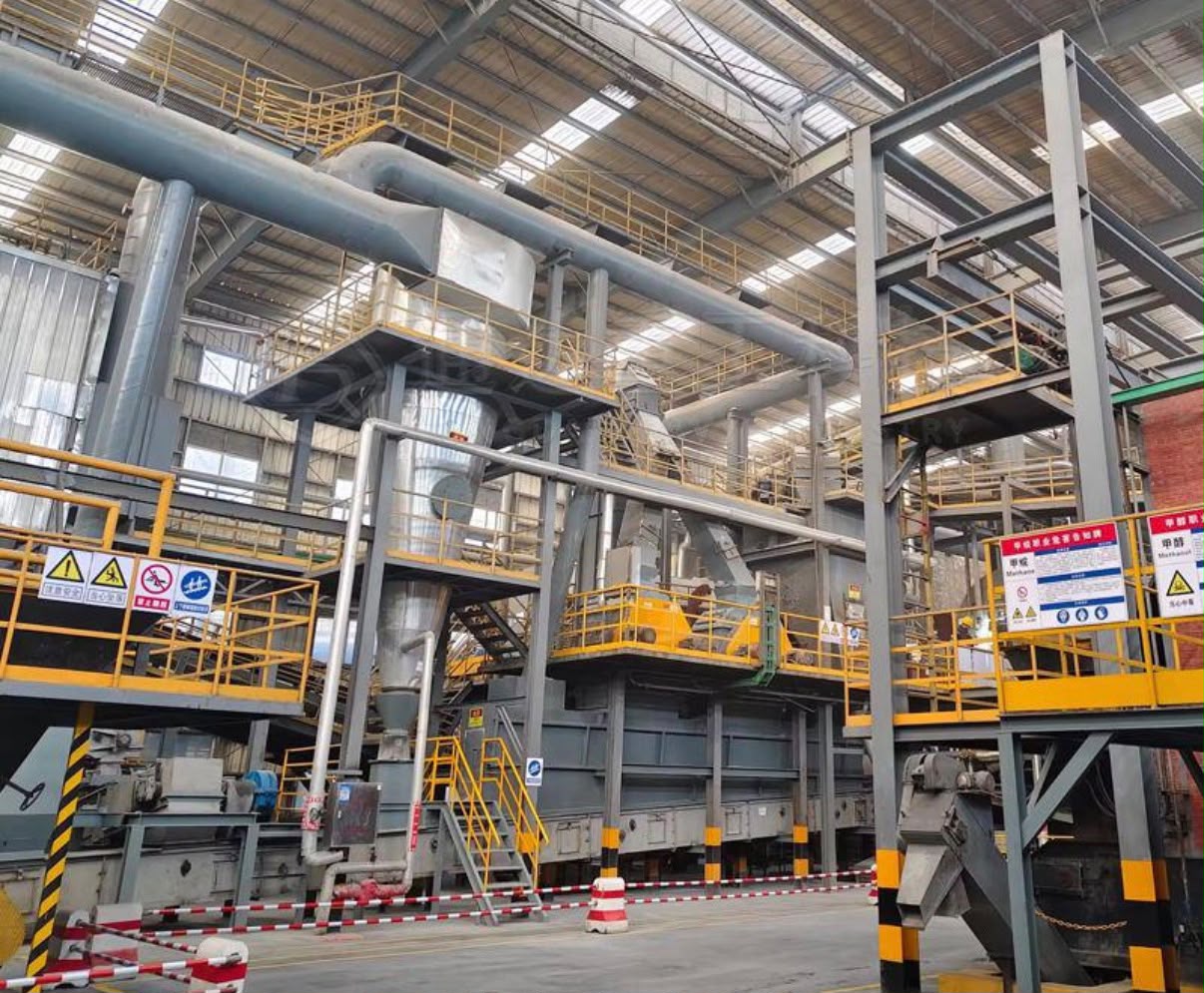
How Is Organo-Mineral Fertilizer Produced?
The manufacturing process varies depending on whether the final product is granular, powdered, pelletized or liquid.
A typical solid organo-mineral fertilizer production process includes the following stages:
1. Raw material receiving
Organic and mineral raw materials are checked for quality, moisture, particle size and compliance with technical specifications.
2. Organic raw material preparation
Depending on the source, the organic material may require drying, crushing, screening, fermentation, composting or stabilization.
3. Formulation development
The required NPK ratio, organic matter content, micronutrient content and physical properties are determined. Raw material quantities are calculated through a controlled production recipe.
4. Dosing and weighing
Each material is transferred to the line in the required proportion using automatic or semi-automatic dosing systems.
5. Mixing
Organic and mineral materials are mixed under controlled conditions to produce a homogeneous formulation.
6. Granulation
For granular products, the mixture is processed in a granulator until the required particle-size distribution is achieved.
Granule quality affects storage, transportation and field-application performance.
7. Drying and cooling
Moisture is controlled to protect granule structure and product stability. The product may be dried and subsequently cooled.
8. Screening and recycling
Oversized and undersized particles are separated. Oversized particles may be crushed, while undersized material can be returned to the production line.
9. Coating
A coating stage may be used to reduce caking, control dust or provide specific physical properties.
10. Packaging and storage
After quality control, the fertilizer is packed and stored under conditions that protect it from moisture and contamination.
Types of Organo-Mineral Fertilizer
Organo-mineral fertilizers can be classified according to physical form and nutrient composition.
By physical form
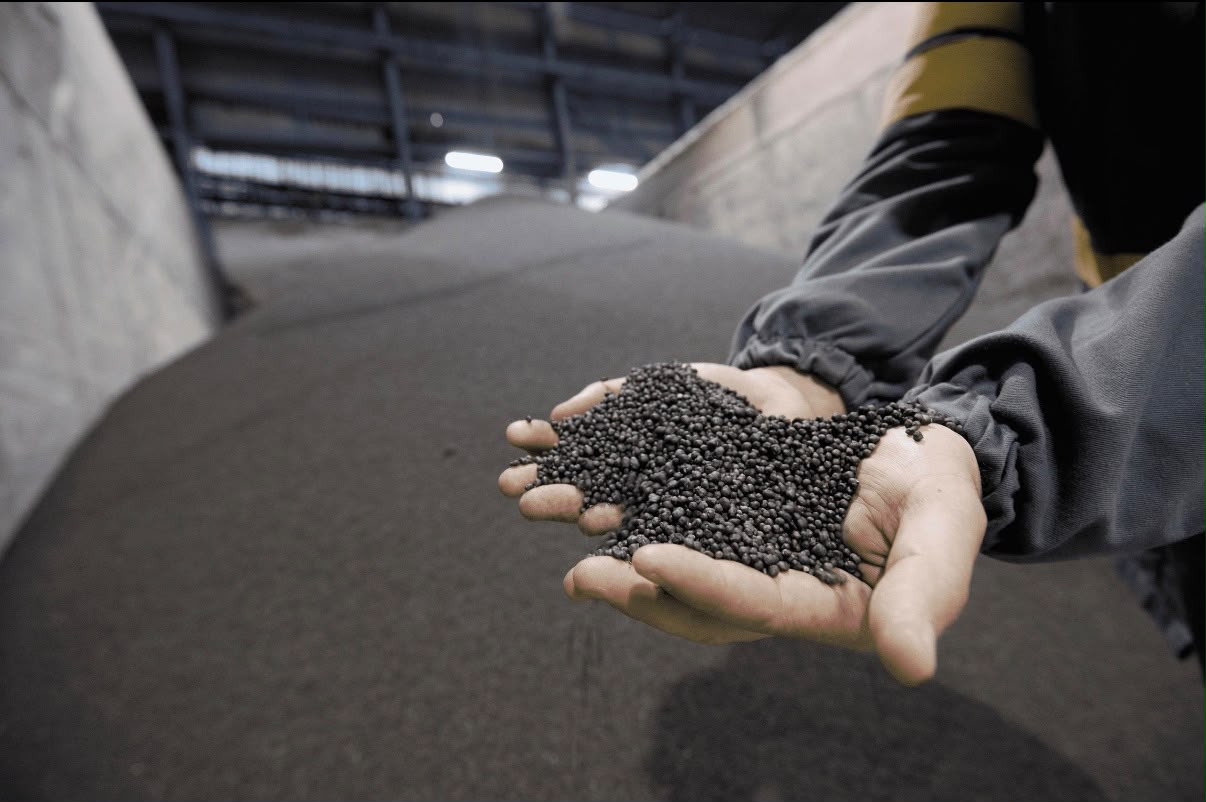
- Granular organo-mineral fertilizer
- Powdered organo-mineral fertilizer
- Pelletized organo-mineral fertilizer
- Liquid organo-mineral fertilizer
- Suspension organo-mineral fertilizer
By nutrient composition
- Nitrogen organo-mineral fertilizers
- NP organo-mineral fertilizers
- NK organo-mineral fertilizers
- NPK organo-mineral fertilizers
- Phosphorus-rich formulations
- Potassium-rich formulations
- Micronutrient-enriched formulations
Turkish fertilizer legislation includes technical categories and requirements for products such as solid NP and NPK organo-mineral fertilizers. Market placement is subject to the applicable registration, analysis, conformity and labelling requirements.
Differences Between Organic, Organo-Mineral and Mineral Fertilizers
FeatureOrganic FertilizerOrgano-Mineral FertilizerMineral FertilizerMain compositionMaterials of organic originOrganic and mineral componentsMineral plant nutrientsNutrient concentrationGenerally lower and more variableCan be balanced through formulationGenerally higher and clearly specifiedOrganic matter contributionYesDepends on product compositionGenerally noNutrient releaseDepends on decompositionDepends on both organic and mineral fractionsOften more readily solubleStandardizationCan vary by raw materialCan be standardized through production recipesGenerally highly standardizedMain purposeSoil and crop nutritionCombined soil and crop nutritionDirect crop nutrition
Organo-mineral fertilizer is not simply an intermediate product between organic and mineral fertilizers. It is a separate fertilizer category with specific formulation, manufacturing and quality requirements.
Which Crops Can Use Organo-Mineral Fertilizer?
Depending on the formulation, organo-mineral fertilizers may be used for:
- Wheat, barley and maize
- Sunflower, cotton and canola
- Vegetable crops
- Fruit orchards
- Vineyards
- Olive groves
- Greenhouse production
- Nurseries
- Landscaping and ornamental plants
Product selection should not be based only on the term “organo-mineral.” The NPK ratio, organic carbon content, secondary nutrients, micronutrients and application instructions must also be evaluated.
How Should Organo-Mineral Fertilizer Be Applied?
A responsible application program should include the following steps:
- Conduct a soil analysis.
- Determine the nutrient requirements of the crop.
- Select the appropriate NPK and organic content.
- Follow the application rate stated on the label.
- Apply at the correct crop-development stage.
- Consider irrigation method and soil moisture.
- Calculate total nutrient inputs when using other fertilizers.
Applying more fertilizer does not automatically result in higher yield. Excessive or unbalanced application may cause nutrient imbalances, salinity, unnecessary costs and environmental risks.
Can Organo-Mineral Fertilizer Be Used in Organic Farming?
The term “organo-mineral” does not automatically mean that a product is authorized for certified organic production.
Only inputs permitted under the applicable organic production legislation and supported by the required documentation may be used. The product label, composition, registration and organic-use certification should be checked separately.
EU organic production rules similarly require that only specifically authorized fertilizers and soil conditioners be used, and only when necessary.
What Should Be Considered When Choosing an Organo-Mineral Fertilizer?
The following criteria should be evaluated:
- Product registration and authorization
- Manufacturer information
- NPK values
- Organic matter or organic carbon content
- Secondary nutrients
- Micronutrients
- Moisture content
- pH value
- Physical form and granule quality
- Recommended application rate
- Manufacturing and expiry information
- Storage requirements
- Compatibility with soil and crop analysis
Selecting a fertilizer solely on price may lead to insufficient crop nutrition or unnecessary input costs.
Conclusion
Organo-mineral fertilizers combine mineral plant nutrients with components of organic origin. Under appropriate formulation and application conditions, they can support crop nutrition while contributing to soil organic matter management.
The expected benefits depend on raw material quality, process design, product formulation, soil analysis and responsible field application.
CFL Engineering provides end-to-end engineering and technical consulting services for organo-mineral fertilizer plants, including feasibility studies, process design, machinery selection, production formulations, plant layouts, commissioning and raw material sourcing.
Frequently Asked Questions
Is organo-mineral fertilizer a chemical fertilizer?
It contains mineral plant nutrients but also includes components of organic origin. It is therefore classified separately from products consisting solely of organic or mineral materials.
When should organo-mineral fertilizer be applied?
The timing depends on the product formulation and crop requirements. Some products are used as basal fertilizers, while others may be suitable for top dressing.
Does organo-mineral fertilizer increase crop yield?
It may support yield and crop quality when the correct product, dose and application program are used. Results depend on soil, climate, crop variety, irrigation and overall crop management.
Should organo-mineral fertilizer be selected according to soil analysis?
Yes. Soil analysis helps identify nutrient deficiencies and determine the most suitable formulation.
What is the difference between NPK and organo-mineral fertilizer?
Conventional NPK fertilizers primarily provide nitrogen, phosphorus and potassium. An NPK organo-mineral fertilizer also contains organic material or organic carbon.